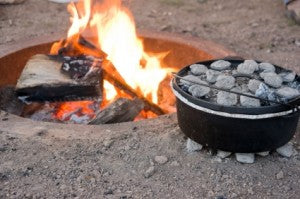
Cooking out in the open is a great way to enjoy the outdoors. It is also a wonderful way to prepare your family for emergencies by learning how to cook without electricity. Outdoor cooking can involve elaborate Dutch-oven meals or simple tinfoil dinners, but cooking and eating outdoors takes some knowledge and preparation. With that in mind, here are a few tips and ideas that can help you have a positive outdoor cooking experience.
-
Decide what cooking method or equipment you will use to prepare your outdoor meal. Will it be a gas powered camping stove, an open fire, charcoal briquettes, or some other method? Before you decide how to heat your meal, be sure to check any local restrictions in your camping area. Are open pit fires allowed? If not, you may need to bring a camping stove or some other alternative cooking method.If open pit fires are allowed and you plan on using one, be sure to only build fires in designated fire pits. If there are no designated fire pits, Replace an open area away from low hanging branches, miscellaneous groundcover, and dry vegetation. Clear a ten-foot circle around the area where you will build a fire and then create a fire bed or fire pit. Fire beds can be made of rocks, silt, clay, sand, or any other non-flammable materials available. A small pit, approximately 4 to 10 inches deep can serve quite well as a fire bed. Surrounding your pit with small rocks can provide an extra layer of protection.
-
Set up a cooking fly. An old tarp or heavy fire-resistant blanket strung between two trees, poles, or walking sticks can provide protection from the elements for your cooking area. Always face the fly away from the wind. This will provide maximum protection from unexpected wind, rain, sleet, or snow. Be sure to dig your fire pit about ten feet in front of the fly, far enough from the fire that sparks won't harm the fabric, but close enough that you can step beneath when weather is bad.When using a camp stove, be sure to plan ahead. You will need to pack more fuel than your stove will carry, unless your trip is very short. Be sure to pack flammable fuels in high quality metal containers and always mark them to keep them separate from drinking water and other liquids. Also, be sure that fuel containers are airtight so that there is no leakage of fuel or fumes, and store extra fuel away from your cooking area.You may want to bring a small table or some wooden blocks to put your stove on. Many stoves have their own stands, but others will need to be kept off the ground and away from potentially flammable materials.When lighting your stove, be sure to follow the manufacturer's recommendations. Never use a stove in or near a tent. Never open fuel containers on or near a hot stove, and never try to refuel a stove that is hot or still burning.
- Whether you are cooking with a stove or an open fire, it might not be a bad idea to locate your cooking area 30 or 40 yards downwind from any tents or shelters in which you will sleep. Curious animals might be attracted by the smells of your food and you don't want them sniffing around your tent at night.
- Remember to properly cook your food. To ensure yourself a successful foil dinner, follow these steps. First, make sure you use two layers of heavy foil and use tight folds to trap the moisture inside. Make sure that you cook on charcoal or the hot coals of a wood fire, never on flames. Occasionally turn over the foil packet to cook evenly and prevent burnt food. Remember, every foil dinner needs a source of moisture like onion slices, soup or salad dressings, seasoning sauces, butter, vegetable stock, or a spoonful of water. Cooking depends on the amount of heat in the coals, but a good average is fifteen to twenty minutes for hamburger, at least twenty minutes for chicken, and longer for solid meats like steak. Use caution because cooking too long can burn or char the food, but undercooking can become a health hazard. Check one meal before pulling out the other meals if you are cooking more than one. Hard veggies like carrots and potatoes will take longer to cook.
- Be sure to leave the camp area in better condition than you found it. Before pulling away from camp, thoroughly douse your fire, mix it around with a stick or shovel, and then douse it again. Refill your fire pit or scatter your fire bed. When you are all packed up, scan the area to make sure that nothing is left behind.
We hope this article has helped you learn how to cook safely outdoors. It is always a good idea to learn alternative cooking methods and ways to prepare food while camping or even in an emergency.


1 comment
Irene Palladino
When we go camping I would have never thought about cooking down wind of our sleeping area. That makes total sense, I will have to make that a normal practice when we are out backpacking. Than you for the insight!